From Data Entry to Decision Making: AI's Role in Modern Bookkeeping
AI is shifting the bookkeeper's job from repetitive categorization to strategic oversight. Here's how the transition works and what it means for the profession.
The Bookkeeper's Day, Before and After
A typical bookkeeper's day used to look like this: open the bank feed, categorize transactions one by one, create a few bills, send some invoices, reconcile accounts, repeat. Most of the day was spent on tasks that required recognition (matching a vendor name to a category) rather than judgment (deciding how to handle an unusual charge).
With AI agents handling the recognition tasks, the bookkeeper's day shifts to exception handling and decision making. You're reviewing the 10% of transactions the AI wasn't sure about, investigating anomalies, and advising clients on their financial patterns.
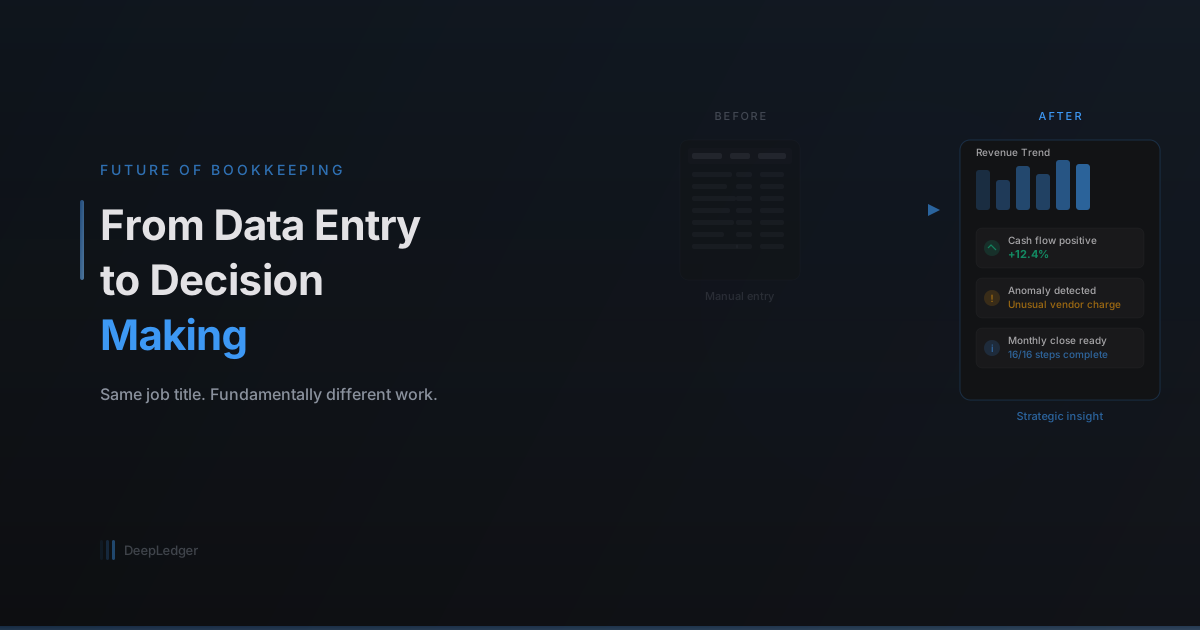
Same job title. Fundamentally different work.
The Learning Loop
What makes AI agents different from static automation is the learning loop. Here's how it works:
- The agent categorizes a transaction — It uses its memory of past decisions to assign a vendor and category
- The human reviews it — If the agent was right, the human approves. If not, they correct it.
- The agent updates its memory — The correction is stored so the same mistake doesn't happen twice
- Next time, the agent gets it right — The pattern is now in memory with higher confidence
This loop means the agent starts out needing significant oversight and gradually requires less. After three to six months on a client, most routine transactions are handled without any human involvement.
What Judgment Work Looks Like
When the repetitive work is automated, bookkeepers focus on tasks that require actual expertise:
Anomaly Investigation
The AI flags a transaction because the amount is 3x the historical average for that vendor. Is it a legitimate large purchase? A billing error? A duplicate charge? That investigation requires context the AI doesn't have — like a conversation with the client about a recent equipment purchase.
Period-End Analysis
The AI generates the P&L and Balance Sheet, but interpreting the numbers is human work. Why are utilities up 40%? Is the revenue dip seasonal or concerning? Should the client adjust their quarterly estimated tax payments?
Client Advisory
With the routine work handled, bookkeepers have time for conversations they couldn't have before: cash flow planning, expense optimization, growth strategy. This is where the profession is heading — from compliance to advisory.
Process Design
Someone still needs to decide how the AI should handle new situations. When a client starts a new business line, the bookkeeper designs the chart of accounts, sets up the class tracking, and teaches the AI the new patterns.
The Accuracy Question
A common concern is whether AI can be trusted with financial data. The answer is nuanced:
For routine transactions with clear patterns (rent, subscriptions, regular vendor payments), AI agents achieve 90-95% accuracy within a few months. That's comparable to — and often better than — a junior bookkeeper handling the same volume.
For complex transactions (owner draws, intercompany transfers, unusual one-time charges), the AI correctly identifies that it doesn't know and escalates to a human. This is arguably safer than a junior staff member who might categorize incorrectly without realizing the complexity.
The key is the confidence threshold. A well-designed system doesn't just make decisions — it knows when to ask for help.
What This Means for the Profession
The accounting profession isn't shrinking. There are more small businesses than ever, and they all need bookkeeping. What's changing is the work itself.
The firms that thrive will be the ones that use AI to handle volume while their human team focuses on judgment, relationships, and advisory. A firm of five people that can serve 200 clients with AI-assisted workflows will outperform a firm of twenty doing everything manually.
This isn't a future prediction — it's happening now. The question for every firm is whether they'll adopt these tools proactively or wait until their competitors have already made the shift.
Starting the Transition
If you're a bookkeeper or firm owner considering AI tools, here's a practical starting point:
- Pick one client with high transaction volume and predictable patterns
- Run the AI agent for one month alongside your normal workflow
- Compare results — accuracy rate, time saved, items flagged
- Expand gradually — add more clients as you build confidence in the system
The transition doesn't have to be dramatic. Start small, measure results, and scale what works.
Ready to automate your bookkeeping?
Get started free